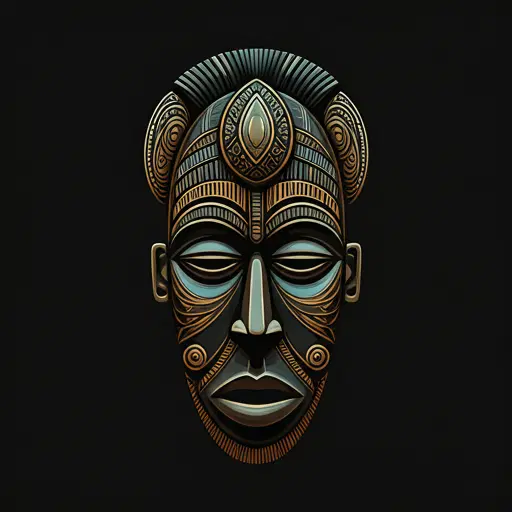
Yoruba religion is one of the world’s great spiritual traditions — a sophisticated system of faith, philosophy, ritual, and art that has shaped the lives of tens of millions of people across West Africa and the global diaspora. Rooted in the spiritual landscape of Yorubaland (present-day southwestern Nigeria, Benin, and Togo), Yoruba religion centers on a supreme creator deity (Olodumare), a pantheon of divine intermediaries (the orisha), an intricate oracle of wisdom (Ifa), and a deep reverence for ancestors (Egungun). Carried across the Atlantic by enslaved Africans, it gave birth to Santeria in Cuba, Candomble in Brazil, and other living traditions in the Americas. This guide offers a comprehensive overview of Yoruba religious belief, practice, and legacy.
What Is Yoruba Religion?
Yoruba religion is the indigenous spiritual system of the Yoruba people, one of the largest ethnic groups in Africa with a population of approximately 45 million. It is not a monolithic, centralized religion with a single holy book or a single governing authority. Instead, it is a constellation of practices, beliefs, and oral traditions that vary by community, lineage, and region — united by shared cosmological principles and a common pantheon of spiritual forces.
At its core, Yoruba religion teaches that the universe is a living, interconnected system in which spiritual forces permeate every aspect of existence. Human beings are not separate from nature or the spirit world — they are participants in a continuous dialogue between the visible (aye, the physical world) and the invisible (orun, the spiritual realm). The goal of Yoruba religious practice is to maintain balance between these realms: to honor the gods and ancestors, to live in alignment with one’s destiny (ori), and to contribute to the well-being of the community.
Yoruba religion predates the arrival of both Islam (which entered Yorubaland through northern trade routes around the 14th century) and Christianity (which arrived with European missionaries in the 19th century). While many Yoruba people today identify as Christian or Muslim, the traditional religion continues to exert profound influence on Yoruba culture, art, music, naming traditions, festivals, and worldview.
Olodumare — The Supreme Creator
Olodumare (also known as Olorun, meaning “owner of the heavens”) is the supreme deity of Yoruba religion — the uncreated creator, the source of all existence, and the ultimate authority in the cosmos. Olodumare is omnipotent, omniscient, and omnipresent, but also remote. Unlike the orisha, Olodumare does not have dedicated shrines, priests, or rituals. There are no temples to Olodumare and no sacrifices offered directly to the supreme being.
This remoteness is not indifference. In Yoruba theology, Olodumare delegated the management of the world to the orisha — divine beings created to serve as intermediaries between the supreme creator and humanity. Olodumare is the architect; the orisha are the administrators. This theological structure has parallels in other African religions and in certain strands of Christian and Islamic thought, where saints, angels, or prophets mediate between God and believers.
Olodumare breathed ashe (spiritual power, life force, the ability to make things happen) into creation. Ashe flows through everything — through the orisha, through nature, through words, through ritual. The concept of ashe is foundational to Yoruba religion: it is the power that makes prayer effective, that gives divination its accuracy, that makes ritual offerings transformative. Every act of worship in Yoruba religion is, at its deepest level, an engagement with ashe.
The Orisha — Divine Intermediaries
The orisha are the divine beings who govern the forces of nature, the domains of human experience, and the pathways between the visible and spiritual worlds. Yoruba tradition recognizes 401 orisha — a number that signifies “beyond counting” — though in practice, a smaller number are widely venerated. Each orisha has a distinct personality, associated colors, sacred foods, songs, dances, taboos, and origin stories (known as pataki in the diaspora or itan in Yoruba).
Major orisha
- Ogun — The orisha of iron, metallurgy, war, and labor. Ogun is the patron of blacksmiths, soldiers, surgeons, and anyone who works with metal or technology. He is fierce, honest, and relentless. His sacred color is green; his offerings include roasted yam, palm wine, and dog.
- Shango (Sango) — The orisha of thunder, lightning, and justice. A former Alaafin (king) of the Oyo Empire who was deified after his death, Shango is passionate, regal, and fearsome. His colors are red and white; his symbol is the double-headed axe (oshe). He punishes liars and rewards the courageous.
- Oshun — The orisha of love, beauty, fertility, and the Oshun River in present-day Osun State, Nigeria. Oshun is sweet, generous, and fiercely protective of her devotees. Her color is gold; her offerings include honey, oranges, and cinnamon. The annual Osun-Osogbo Festival, a UNESCO World Heritage event, draws hundreds of thousands of pilgrims to her sacred grove.
- Yemoja (Yemanja) — The orisha of the ocean, motherhood, and the protection of children. Yemoja is the cosmic mother — nurturing, vast, and powerful. Her colors are blue and white. In Brazil, the Festa de Iemanja on February 2nd sees millions of devotees offering flowers and gifts to the sea.
- Obatala — The orisha of creation, purity, and wisdom. Olodumare entrusted Obatala with the task of molding human bodies from clay, which Olodumare then breathed life into. Obatala values patience, clarity, and ethical behavior above all. His color is white; his offerings are cool, bland foods (white rice, coconut, shea butter).
- Eshu (Elegba) — The orisha of the crossroads, communication, and the threshold between worlds. Eshu is the divine trickster and messenger — no prayer reaches any orisha without first passing through Eshu. He is unpredictable, witty, and absolutely essential. Every ritual begins with an offering to Eshu to ensure the channels of communication are open.
- Oya — The orisha of wind, storms, transformation, and the passage between life and death. Oya is a warrior goddess associated with the Niger River. She is fearless, radical, and the guardian of the cemetery gates. Her colors are burgundy and purple.
- Orunmila — The orisha of wisdom, knowledge, and divination. Orunmila witnessed the creation of the universe and knows the destiny of every soul. He is the patron of Ifa divination and is served by the Babalawo (father of secrets), the highest-ranking priest in the Ifa tradition.
Ifa — The Oracle of Wisdom
Ifa is the divination system at the heart of Yoruba religion — a vast body of oral literature, ethical instruction, and ritual prescription that has been called the encyclopedia of Yoruba knowledge. The Ifa literary corpus, organized into 256 chapters called Odu, contains thousands of verses (ese) covering every conceivable aspect of human experience: birth, death, marriage, conflict, illness, prosperity, spiritual growth, and moral dilemmas.
Ifa divination is performed by a Babalawo (“father of secrets”), a priest who has undergone years of rigorous training to memorize the Odu and their associated verses. The divination process involves the manipulation of sacred palm nuts (ikin) or a divination chain (opele) to generate one of the 256 Odu. The Babalawo then recites the verses associated with that Odu and interprets their relevance to the client’s situation. The consultation often concludes with a prescription — a sacrifice (ebo), a behavioral change, or a ritual — designed to align the client’s life with their destiny.
In 2005, UNESCO proclaimed the Ifa Divination System a Masterpiece of the Oral and Intangible Heritage of Humanity — recognizing it as one of the most complex and sophisticated knowledge systems ever developed by an oral culture.
Egungun — Honoring the Ancestors
Ancestor veneration is a pillar of Yoruba religion. The dead do not disappear — they transition to orun (the spiritual realm) and continue to participate in the life of their descendants. Ancestors who lived well, died at a ripe age, and were properly buried become ara orun (“inhabitants of heaven”) — benevolent spirits who protect, guide, and bless their living family.
The Egungun festival is the most dramatic expression of ancestor worship in Yoruba culture. During the festival, masked figures — also called Egungun — emerge from the forest and dance through the streets of the town. These masqueraders are believed to be embodiments of the ancestors, returning from orun to visit the living. The costumes are elaborate: layers upon layers of richly colored fabric that swirl and billow as the Egungun spins, creating a mesmerizing visual spectacle. Some Egungun are playful and comedic; others are solemn and awe-inspiring. All command deep respect.
Egungun festivals occur annually in Yoruba towns across southwestern Nigeria, particularly in Oyo, Ibadan, Abeokuta, and Ede. Smaller ancestor-honoring rituals take place in family compounds throughout the year — offerings of food, water, and prayers placed at the family shrine or at the base of an ancestral tree.
Sacred Practices and Rituals
Yoruba religious practice encompasses a wide range of rituals, ceremonies, and devotional acts:
- Sacrifice (ebo): The offering of food, drink, animals, or symbolic objects to the orisha or ancestors. Ebo is the primary mechanism for communicating with the spiritual world and effecting change. The nature of the sacrifice is determined by Ifa divination.
- Initiation (itelodu): The process by which a person is formally dedicated to a specific orisha. Initiation involves rituals of purification, instruction, and spiritual bonding that can last several days. The initiate emerges with a new spiritual identity and a lifelong relationship with their orisha.
- Festivals: Annual celebrations honoring specific orisha or marking seasonal transitions. The Osun-Osogbo Festival (Oshun), the Shango Festival in Oyo, the Ogun Festival in Ondo, and the Olojo Festival in Ife are among the most significant. These events combine prayer, sacrifice, music, dance, processions, and communal feasting.
- Praise singing (oriki): The oral recitation of lineage names, heroic deeds, and divine attributes. Oriki are performed at ceremonies, festivals, and daily devotions. They are a form of prayer, genealogy, and poetry rolled into one.
- Sacred drumming: Drums — especially the bata drums — are considered vehicles of spiritual communication. Specific drum rhythms are associated with each orisha and are believed to invoke their presence. The master drummer (ayan) holds an honored position in Yoruba society.
Yoruba Religion in the Americas
The transatlantic slave trade forcibly transported millions of Yoruba people to the Americas between the 16th and 19th centuries. Despite the brutal conditions of slavery, Yoruba spiritual traditions survived — adapted, disguised, and transformed into new religious systems that are among the most vital and fastest-growing faiths in the Western Hemisphere today.
Santeria / Regla de Ocha (Cuba)
In Cuba, enslaved Yoruba (known as Lucumi) syncretized their orisha with Catholic saints to practice their religion under the cover of Catholicism. Shango was identified with Saint Barbara; Oshun with Our Lady of Charity (La Caridad del Cobre), Cuba’s patron saint; Obatala with Our Lady of Mercy. The resulting tradition — variously called Santeria, Regla de Ocha, or Lucumi — preserves much of the Yoruba ritual structure, including divination, initiation, animal sacrifice, and orisha worship. Today, Santeria has an estimated 100 million practitioners worldwide.
Candomble (Brazil)
In Brazil, a parallel process produced Candomble — a vibrant religion that blends Yoruba, Fon (Dahomey), and Bantu spiritual elements with Catholicism and indigenous Brazilian spirituality. Candomble temples (terreiros) are found throughout Brazil, particularly in the northeastern state of Bahia (Salvador). The orixas (Brazilian spelling) are central figures, and the tradition is famous for its elaborate public festivals, its sacred drumming, and its spectacular ritual dances in which devotees enter trance states and embody the orixas.
Other diaspora traditions
Yoruba religious elements also appear in Trinidadian Shango (Orisha), Haitian Vodou (where certain Yoruba orisha were absorbed into the Fon-derived lwa system), Louisiana Voodoo, and the modern Ifa revivalist movement in the United States and Europe. Each of these traditions represents a creative and resilient response to the trauma of slavery — a refusal to let the spiritual inheritance of Africa be erased.
Yoruba Religion vs Christianity and Islam
Yoruba religion, Christianity, and Islam have coexisted in Yorubaland for centuries — sometimes harmoniously, sometimes in tension. A few key points of comparison illuminate the relationship:
- Monotheism: All three traditions affirm a single supreme God. Yoruba religion’s Olodumare is functionally equivalent to the God of Abraham — omnipotent, omniscient, and the source of all creation. The orisha are intermediaries, not rival gods — a concept paralleled by angels and saints in Christianity and Islam.
- Sacred text vs oral tradition: Christianity has the Bible; Islam has the Quran. Yoruba religion’s “text” is the Odu Ifa — an oral corpus of 256 chapters and thousands of verses, transmitted through memorization rather than writing. The Odu serve the same functions as scripture: moral instruction, historical narrative, and spiritual guidance.
- Afterlife: Yoruba religion does not have a heaven/hell binary. The dead transition to orun and may be reborn into the family through reincarnation (atunwa). Living well, dying at a ripe age, and being properly mourned are the keys to a good afterlife — not belief in a specific creed.
- Exclusivity vs inclusivity: Christianity and Islam tend toward theological exclusivity — the claim that their path is the only path to salvation. Yoruba religion is inherently pluralistic. It does not seek converts and does not condemn other religions. This pluralism is one reason why syncretism (the blending of Yoruba tradition with Christianity or Islam) has been so common.
The Itsekiri Parallel: Oritsa and Dual Faith
Shared spiritual roots
The Itsekiri are a Yoruboid people whose spiritual language shares roots with Yoruba. The Itsekiri word for God — Oritsa — is cognate with orisha. This linguistic connection reflects centuries of shared cosmological heritage between the Itsekiri and the broader Yoruba cultural sphere.
The Itsekiri are a Yoruboid people whose spiritual language shares deep roots with Yoruba. The Itsekiri word for God — Oritsa — is cognate with orisha, reflecting a common ancestral framework for understanding the divine. When Portuguese missionaries arrived in Warri in the 1500s, the Itsekiri were among the first African peoples to encounter Christianity. The Olu (king) of Warri sent his son to Portugal for education and baptism in the early 17th century, establishing one of the oldest Christian communities in West Africa.
Rather than replacing their existing beliefs, many Itsekiri families maintained a dual faith system — attending church on Sunday while continuing traditional practices honoring Oritsa and the umale (spirits). Shrines to local deities coexisted with Catholic chapels in Warri for centuries. This syncretism parallels the Yoruba experience in the diaspora, where orisha worship was layered beneath the iconography of Catholic saints. The Itsekiri case demonstrates that religious blending is not solely a product of slavery and oppression — it can also emerge organically when cultures meet through trade and diplomacy.
Today, the majority of Itsekiri identify as Christian, but traditional festivals, ceremonies, and spiritual vocabulary remain deeply embedded in community life. The annual Itsekiri religious heritage continues to draw scholarly interest as a case study in how African peoples have navigated the encounter between indigenous spirituality and world religions. For more on Itsekiri origins and culture, visit our Heritage: Origins page.
Yoruba Religion Today
Yoruba religion is experiencing a global renaissance. In Nigeria, a new generation of traditionalists, artists, and intellectuals is reclaiming Yoruba spiritual heritage from decades of stigmatization by both Christian and Islamic establishments. The annual Osun-Osogbo Festival attracts international pilgrims and media attention. Ifa priests (Babalawo) are increasingly visible in public life, and Yoruba philosophical concepts — especially iwa pele (gentle character, the supreme ethical virtue) and ashe (life force) — have entered mainstream Nigerian discourse.
In the diaspora, the picture is equally dynamic. Santeria, Candomble, and Ifa are among the fastest-growing religions in the Americas. The United States alone has an estimated several million practitioners of various orisha-based traditions. Academic programs in Africana Studies, Religious Studies, and Anthropology at major universities include Yoruba religion in their curricula. Books, podcasts, and documentaries about the orisha are proliferating.
The digital age has transformed how Yoruba religion is learned and practiced. Online communities connect devotees across continents. Babalawo offer virtual consultations. YouTube channels teach the Yoruba language and Ifa verses. Social media platforms host vibrant discussions about orisha theology, ritual practice, and the challenges of maintaining tradition in modernity.
Yet challenges persist. The commercialization of orisha imagery (Oshun on t-shirts, Shango on sneakers) raises questions about cultural commodification. Tensions between traditional practitioners and diaspora communities over authority, authenticity, and innovation are ongoing. And the fundamental threat — the loss of elder knowledge as aging Babalawo pass on without adequate successors — remains urgent.
Yoruba religion endures because it answers perennial human questions with remarkable depth and beauty: Who am I? What is my purpose? How should I live? How do I relate to the natural world, to my ancestors, and to the divine? For millions of people across Africa and the diaspora, the orisha remain living presences — not relics of the past but active participants in the unfolding drama of human existence.
Explore related topics in our guides to the orisha, Ifa divination, Itsekiri religious heritage, and the full African spirituality hub.