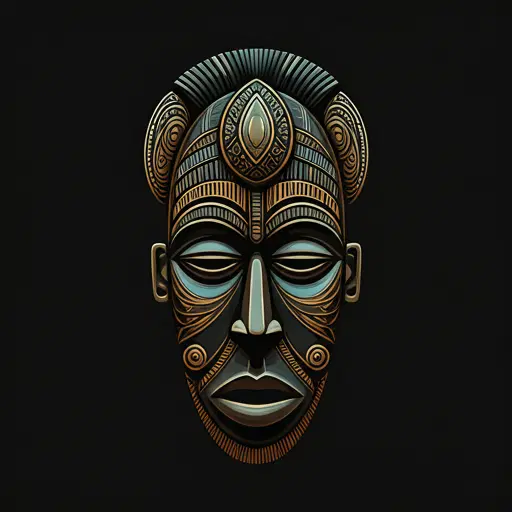
Ifa divination is the sacred oracle system at the heart of Yoruba religion — a vast intellectual achievement that combines mathematics, oral literature, theology, medicine, and ethical philosophy into a single, coherent system of knowledge. At its core, Ifa is a method of consulting the spiritual world for guidance. A trained priest called a babalawo (“father of secrets”) manipulates sixteen sacred palm nuts (ikin) or a divining chain (opele) to produce one of 256 possible signs called odu. Each odu is associated with a vast body of oral verses — mythology, history, proverbs, prescriptions, and ethical instruction — that the babalawo interprets for the person seeking guidance. In 2005, UNESCO recognized Ifa as a Masterpiece of Oral and Intangible Heritage of Humanity, acknowledging its extraordinary depth and continued vitality.
What is Ifa?
Ifa is simultaneously a divination system, an oral literary corpus, a philosophical tradition, a medical practice, and a way of life. The word “Ifa” refers both to the system itself and to Orunmila, the orisha of wisdom and divination who is its divine patron. Ifa originated among the Yoruba people of southwestern Nigeria and has been practiced for over a millennium. Unlike written scriptures, Ifa is transmitted entirely through oral tradition — a babalawo must memorize hundreds, sometimes thousands, of verses over years of apprenticeship.
The genius of Ifa lies in its structure. The system is built on a binary mathematical foundation that produces 256 possible combinations — a number that, remarkably, is the same as the number of values representable in an eight-bit byte in modern computing. Each of the 256 odu is a category of knowledge, and within each odu are multiple verses (ese ifa) that address different aspects of human experience. The total corpus is estimated at over 4,096 verses, though individual babalawo may know only a fraction of this body. The system is open-ended: new verses can be composed within the existing framework, allowing Ifa to address contemporary issues without abandoning its ancient structure.
Ifa is not fortune-telling. It does not predict a fixed future. Instead, it diagnoses the spiritual forces at work in a person’s life — which orisha or ancestors are involved, what sacrifices or behavioral changes are needed, and what outcomes are likely if the proper adjustments are made. The underlying philosophy is that destiny (ori) is not rigidly determined; it can be improved through knowledge, proper action, and alignment with spiritual forces. Ifa is, in this sense, a technology of empowerment — a system that gives individuals the information they need to navigate a complex spiritual universe.
The 256 Odu
The odu are the chapters or signs of the Ifa corpus. They are generated through a binary system: during divination, each manipulation of the palm nuts or divining chain produces either a single mark (I) or a double mark (II). Eight marks are produced in sequence, creating a figure of eight binary positions — yielding 256 possible combinations (2^8 = 256). The 256 odu are organized into 16 principal (odu meji) and 240 secondary (odu amulu or omo odu) combinations.
The 16 principal odu, in traditional hierarchical order, are: Eji Ogbe, Oyeku Meji, Iwori Meji, Odi Meji, Irosun Meji, Owonrin Meji, Obara Meji, Okanran Meji, Ogunda Meji, Osa Meji, Ika Meji, Oturupon Meji, Otura Meji, Irete Meji, Ose Meji, and Ofun Meji. Each principal odu has a distinct character, set of associations, and body of verses. Eji Ogbe, the first and highest-ranking odu, is associated with light, clarity, and the revelation of truth. Oyeku Meji, the second, is associated with darkness, night, and the mysteries of death and rebirth.
Within each odu, the verses (ese ifa) follow a consistent structure: a mythological narrative, often involving orisha, humans, or animals; a moral or philosophical lesson; a specific prescription (sacrifice, herbal remedy, behavioral change); and an outcome showing what happened when the prescription was followed (or ignored). This structure makes each verse both a story and a practical instruction, embedding ethical teaching within narrative in a way that makes it memorable and applicable to real life.
Orunmila and the Babalawo
Orunmila (also called Ifa, Agbonniregun, or Eleri Ipin) is the orisha of wisdom, divination, and destiny. In Yoruba theology, Orunmila was present at the creation of the universe and witnessed the choosing of every human being’s destiny before birth. This makes him the ultimate repository of knowledge about fate, character, and the relationship between the human and divine worlds. He does not directly possess his priests; instead, he communicates through the mathematical patterns of the odu system.
The babalawo (“father of secrets” or “father of the mysteries”) is Orunmila’s human representative. Becoming a babalawo is one of the most demanding intellectual and spiritual undertakings in any religious tradition. Traditionally, the apprenticeship lasts seven to twelve years, during which the student must memorize hundreds of odu verses, learn herbal medicine and pharmacology, master the physical manipulation of the divining instruments, study the mythologies and praise poetry of the orisha, and undergo a series of progressively deeper initiations. A fully trained babalawo is a theologian, physician, psychologist, poet, historian, and counselor combined.
The babalawo occupies the highest position in the Yoruba priestly hierarchy. While other priests serve individual orisha (a priest of Shango, a priestess of Oshun), the babalawo serves Orunmila, who is the oracle for all the orisha. This gives the babalawo a unique, cross-cutting authority: any person, regardless of which orisha they worship, may need to consult a babalawo for divination. The Ifa priesthood has been exclusively male in most Yoruba communities, though some contemporary practitioners and scholars debate this restriction.
How Divination Works
An Ifa consultation typically begins when a client approaches a babalawo with a question or problem — illness, infertility, business failure, family conflict, career decisions, or simply a desire for general life guidance. The babalawo invokes Orunmila and the ancestors, then begins the physical process of divination using either the ikin (sixteen sacred palm nuts) or the opele (a chain of eight half-seed pods connected by links).
With the ikin method (the more sacred and time-consuming approach), the babalawo rapidly grasps the palm nuts and transfers them from hand to hand. If one nut remains in the grasping hand, two marks are made on a divining board dusted with powder; if two nuts remain, one mark is made. (Zero or three remaining means the cast is void and must be repeated.) This process is repeated eight times to produce the complete odu figure. With the opele, the chain is cast on a flat surface, and the resulting pattern of concave and convex seed pods is read as the odu figure.
Once the odu is identified, the babalawo recites the verses associated with that odu, selecting the ones most relevant to the client’s situation. The verses contain narratives that parallel the client’s circumstances, along with specific prescriptions: sacrifices to be made, behavioral changes to be implemented, orisha to be honored, or herbs to be prepared. The client does not passively receive a prediction; they actively engage with the wisdom of the odu, making choices about how to respond. The babalawo serves as a guide and interpreter, not a fortune teller.
Ifa and Daily Life
In traditional Yoruba society, Ifa divination is not reserved for moments of crisis. It is consulted at every major life transition: before a child is born (to determine the child’s guardian orisha and destiny), at naming ceremonies, before marriage, when choosing a career or business venture, before travel, during illness, and at death. Communities consult Ifa before planting and harvesting, before warfare or major political decisions, and at the installation of kings and chiefs. Ifa provides a framework for decision-making that connects individual choices to a larger spiritual and communal order.
Ifa’s ethical system is embedded in its verses. The odu teach values such as honesty, generosity, patience, respect for elders, care for children, hospitality to strangers, and reverence for the natural world. They also warn against specific vices: greed, arrogance, dishonesty, neglect of family, and disrespect for the sacred. Because these teachings are delivered through narrative rather than commandment, they are absorbed as stories rather than rules — making them more memorable and culturally durable than abstract ethical codes.
Ifa as Intangible Heritage (UNESCO)
In 2005, UNESCO proclaimed the Ifa Divination System a Masterpiece of the Oral and Intangible Heritage of Humanity. The UNESCO declaration recognized Ifa as one of the world’s most complex and intellectually rich oral traditions, comparable in scope and depth to any written sacred text. The declaration noted Ifa’s contributions to philosophy, medicine, environmental knowledge, and ethical thought, and called for its protection and transmission to future generations.
The UNESCO recognition was a landmark moment for African religious traditions. For centuries, colonial and missionary attitudes had dismissed Ifa as superstition, witchcraft, or primitive magic. The UNESCO declaration affirmed what practitioners had always known: Ifa is a sophisticated intellectual system that deserves the same respect accorded to the great literary and philosophical traditions of other civilizations. It also drew international attention to the threats facing Ifa — urbanization, religious conversion, and the aging of master babalawo who carry irreplaceable oral knowledge.
Ifa in the Americas
The transatlantic slave trade carried Ifa to the Americas, where it survived and evolved in remarkable ways. In Cuba, Ifa divination is practiced within the Regla de Ocha (Santeria) and Regla de Ifa traditions, with babalawo maintaining much of the original Yoruba ritual structure. In Brazil, Ifa appears in Candomble as the divination system of the babalaos, though other divination methods (such as the buzios, or cowrie shell casting) are also widely used. In Trinidad, the Orisha tradition preserves Ifa elements alongside local innovations.
In the United States, Ifa practice has grown significantly since the 1960s, fueled by African American cultural nationalism, Cuban immigration, and a broader movement of spiritual return. American babalawo train both in the United States and in Nigeria, and a growing number of practitioners travel to Ile-Ife for initiation and advanced study. The internet has also facilitated global Ifa education, with online classes, podcasts, and social media accounts making Ifa knowledge more accessible than ever before — though traditionalists debate whether digital transmission can replace face-to-face apprenticeship.
Ifa and Itsekiri Spirituality
Itsekiri divination traditions
The Itsekiri people have their own divination traditions connected to the umale system. While Ifa is specifically Yoruba, the Itsekiri — as a Yoruboid people — share structural parallels in their approach to consulting the spiritual world. Explore Itsekiri religion and spiritual traditions.
The Itsekiri people of the western Niger Delta, as a Yoruboid-speaking community, share deep linguistic and cultural connections with the Yoruba. While Ifa divination is specifically identified with the Yoruba heartland, the Itsekiri have their own divination traditions that operate within their umale spiritual system. Diviners in Itsekiri communities historically served roles parallel to the babalawo — diagnosing spiritual causes of illness and misfortune, prescribing sacrifices and remedies, and mediating between the human community and the spirit world.
The Itsekiri case illustrates a broader point about divination in Africa: while Ifa is the most famous and best-documented system, it exists within a continent-wide ecology of divination practices. From the Ifa of the Yoruba to the Afa of the Igbo to the bone-throwing of the Zulu to the geomantic traditions of the Sahel, divination is one of the most universal features of African traditional religion. Each system reflects its community’s specific cosmology, but all share the foundational belief that the material world has a spiritual dimension that trained specialists can read and interpret.
For the Itsekiri diaspora, these divination traditions are part of the broader spiritual heritage that organizations like INC-USA work to preserve. At INC-USA gatherings, the pouring of libation and the honoring of ancestors reflect the same spiritual worldview that undergirds Ifa and Itsekiri divination: a universe in which the living and the dead are in constant communication, and human wellbeing depends on maintaining that connection.
Explore African spirituality
Continue your journey: Orisha, African Traditional Religion, Libation ceremony, Itsekiri religion, and the full collection.