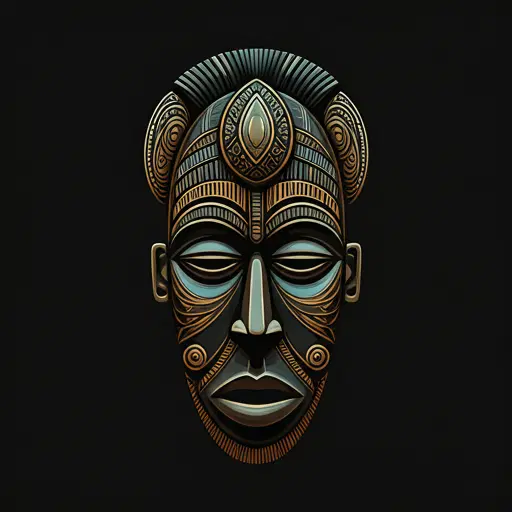
African gods form one of the oldest and most influential pantheons of deities in human religious history. Across the continent, most traditional spiritual systems share a similar structure: a distant supreme creator, a crowd of accessible intermediate deities, and an intimate web of ancestors. These are living religions. Tens of millions of people — on the continent and throughout the diaspora — still pray to, dance for, and consult the deities of Africa.
African Spirituality: An Overview
Most African religious systems share several core features:
- A supreme creator, usually considered too vast and impersonal to worship directly
- A pantheon of lesser deities (orishas, obosom, lwa, vodun, etc.) who act as intermediaries
- Ancestor veneration — the recently dead remain active forces in the lives of their descendants
- Divination — communicating with the spiritual world through systems like Ifa (Yoruba), bone throwing (Zulu), kola nut, or shells
- Sacrifice and offering — food, drink, and symbolic gifts given to deities and ancestors
- Spirit possession — trained devotees becoming temporary vessels for deities during ceremony
Yoruba Orishas
The Yoruba pantheon is the most thoroughly documented and globally influential of all African religious systems. The supreme creator is Olodumare (also called Olorun — "owner of heaven"). Below Olodumare are the Orishas, numbering 401 according to tradition. The most important:
- Obatala — the sculptor of human bodies; patron of purity, wisdom, and the elderly
- Shango (Sango) — god of thunder and lightning; a former king of Oyo who became a deity after death. Warrior, dancer, and judge.
- Oshun — goddess of fresh water, rivers, love, beauty, fertility, and diplomacy. The Osun River in Nigeria is her sacred abode.
- Yemoja — mother of all Orishas; goddess of the ocean and motherhood; protector of women and children
- Oya — goddess of wind, storms, lightning, and transformation; Shango's most powerful wife; guardian of the threshold between life and death
- Ogun — god of iron, war, and technology; patron of blacksmiths, hunters, soldiers, and surgeons
- Eshu (Esu / Elegba) — messenger between Orishas and humans; the trickster who opens and closes roads; must be appeased first in any ritual
- Olokun — god(dess) of the deep sea and the wealth it conceals; especially revered in Benin and among Itsekiri, Ijaw, and other Niger Delta peoples
The Akan Pantheon
The Akan peoples of Ghana (Ashanti, Fante, Akuapem) worship Nyame as the supreme creator and Asase Yaa as Earth Mother. Lesser deities are called abosom (plural). The trickster spider-god Anansi, whose stories carry wisdom through humor, is perhaps the most globally famous Akan figure — the direct ancestor of Br'er Rabbit and other diasporic trickster folklore.
Zulu Deities
The Zulu supreme being is Unkulunkulu ("the greatest one"), the creator of humanity who taught the first people how to live. The sky god uMvelinqangi is associated with the heavens and rain. Ancestors (amadlozi) are the most actively consulted spiritual presence in daily Zulu life; they are the primary recipients of prayer, sacrifice, and divination.
Bantu Spiritual Traditions
Across the vast Bantu-speaking world — from Cameroon to South Africa — most peoples name a supreme creator (Mulungu, Nzambi, Leza, Katonda, Nkulunkulu). In most traditions this creator stands apart, while daily spiritual life revolves around ancestors and more immediate deities of rain, land, and community. The Kimpasi initiation societies of the Kongo, the Zar possession cults of the Horn, and the Nguni sangoma traditions of southern Africa are all living descendants of these Bantu systems.
Famous African Gods
- Shango — Yoruba god of thunder, now worshipped across the Americas
- Oshun — beloved goddess of love, honored at the annual Osun-Osogbo festival in Nigeria, a UNESCO heritage event
- Anansi — spider-trickster of the Akan, global folklore icon
- Olorun / Olodumare — Yoruba supreme creator
- Eshu — Yoruba messenger and trickster; opens all roads
- Mami Wata — water spirit revered across much of West, Central, and diasporic Africa; often depicted with a mermaid's tail and a serpent
- Damballah — Haitian Vodou sky-serpent; descendant of Fon Dan
- Legba — Fon counterpart to Eshu; guardian of crossroads
African Gods in the Diaspora
The Atlantic slave trade carried African deities across the ocean. Forced conversion to Catholicism prompted a remarkable strategy of survival: African deities were syncretized with Catholic saints. Shango became Saint Barbara (both associated with lightning); Yemoja became Our Lady of Regla; Ogun became Saint Peter (both with iron keys). Beneath the public Catholic veneer, the Orishas continued to receive worship in private. The result is a family of vibrant, living African-diaspora religions:
- Santería / Lucumí — Cuba and the US (Yoruba-derived)
- Candomblé — Brazil (Yoruba, Fon, and Bantu-derived)
- Vodou — Haiti (primarily Fon / Ewe-derived)
- Umbanda — Brazil (eclectic mix)
- Obeah — Jamaica and the Anglophone Caribbean
Today, the Orishas are claimed proudly by millions of Yoruba, Afro-Cuban, Afro-Brazilian, and Black American worshippers — as well as by artists like Beyoncé (Lemonade has heavy Oshun imagery) and Janelle Monáe.
Itsekiri Spirituality
The Itsekiri people share the broader West African cosmology with deep reverence for water deities (Olokun and Umalokun, the great water spirits), ancestors (edjo), and the sacred presence of the Olu of Warri as a semi-divine figure. Learn more on the Itsekiri Traditions page.