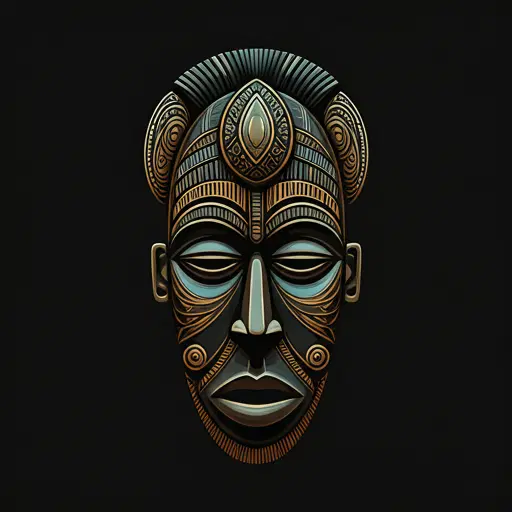
The orisha are the divine spirits of Yoruba religion — a vast, sophisticated spiritual system that originated among the Yoruba people of southwestern Nigeria and Benin, and now spans the globe from Havana to Salvador to Brooklyn. Each orisha governs a specific domain of nature, human experience, or cosmic principle: thunder and lightning, rivers and oceans, iron and warfare, love and fertility, crossroads and communication. Together, they form a spiritual ecology in which every force of nature has a divine personality, a mythology, a priesthood, and a living community of worshippers. This guide explores who the orisha are, where they came from, and why they matter — from the sacred groves of Osogbo to the streets of contemporary cities worldwide.
What are Orisha?
In Yoruba theology, the orisha (also spelled orisa or orixá) are intermediary spirits who serve as agents of Olodumare, the supreme creator god. They are not gods in the polytheistic sense of competing deities; they are emanations, aspects, or ministers of the one divine source. Each orisha embodies a specific cosmic principle and governs a corresponding domain of human experience. Ogun rules iron, metalworking, and the cutting edge of civilization. Shango commands thunder, justice, and royal authority. Oshun presides over sweet water, love, fertility, and diplomacy. Yemoja mothers the oceans and protects children. Eshu guards the crossroads and carries messages between the human and divine worlds.
The Yoruba traditionally recognize 401 orisha, though this number is symbolic rather than exact — it signifies a vast, uncountable spiritual community. In practice, roughly twenty to thirty orisha are widely worshipped, with the most prominent varying by region. Each orisha has a distinct personality, mythology, set of taboos, sacred colors, preferred offerings, rhythms (played on the bata drum), and oriki (praise poetry). Devotees are typically “chosen” by a particular orisha during divination, and the relationship between a person and their orisha is understood as a lifelong spiritual partnership.
Orisha worship is not a relic of the past. It is a living, growing religion practiced by tens of millions of people worldwide. In Nigeria, traditional orisha festivals continue in cities like Osogbo, Ife, and Oyo. In Cuba (as Santeria or Regla de Ocha), Brazil (as Candomble), Trinidad (as Orisha), and the United States, orisha-based traditions are thriving and expanding. The Osun-Osogbo Sacred Grove in Nigeria is a UNESCO World Heritage Site, and Ifa divination was recognized by UNESCO as a Masterpiece of Oral and Intangible Heritage of Humanity in 2005.
Origins in Yoruba Religion
The orisha tradition is rooted in the religious and philosophical worldview of the Yoruba, one of the largest ethnic groups in Africa. The Yoruba homeland spans southwestern Nigeria (including the modern states of Oyo, Osun, Ogun, Ondo, Ekiti, Lagos, and Kwara), the Republic of Benin, and parts of Togo. The ancient city of Ile-Ife is regarded as the spiritual cradle of the Yoruba people and the place where Olodumare sent the orisha to create the earth. In the Yoruba creation myth, the orisha Obatala descended from heaven on a chain, carrying a calabash of sand, a five-toed hen, and a palm kernel. He poured the sand on the primordial waters, the hen scratched it into land, and the palm kernel became the first tree. Ile-Ife — whose name means “the place of spreading” — was thus the first city, and all Yoruba trace their origins to it.
The theological framework of the orisha system is remarkably sophisticated. At the apex sits Olodumare (also called Olorun), the supreme, omnipotent creator who is too vast and transcendent for direct human interaction. Below Olodumare are the orisha, who serve as intermediaries, each governing an aspect of the created world. Below the orisha are the ancestors (egungun), who continue to guide the living from the spirit world. And at the center of it all is ori — the personal inner head or consciousness, which the Yoruba consider the most important spiritual entity, because it is the seat of destiny and individual character.
This theological structure predates European contact by centuries. Archaeological evidence from Ile-Ife, including the famous bronze and terracotta heads dating to the twelfth and thirteenth centuries, demonstrates a highly developed spiritual culture with orisha imagery. When the Portuguese arrived on the Nigerian coast in the late fifteenth century, they encountered a fully realized religious civilization with priesthoods, temples, festivals, and an oral literary tradition (the Ifa corpus) that rivals any sacred text in the world in size and complexity.
The Supreme Deity: Olodumare
Before exploring the individual orisha, it is essential to understand Olodumare, the supreme being of Yoruba theology. Olodumare (also known as Olorun, “owner of heaven,” or Eleda, “creator”) is the source of all existence, the ground of all being, and the ultimate authority in the cosmos. Olodumare is genderless, formless, and beyond direct human comprehension — worshippers do not build temples to Olodumare or make offerings, because the supreme being transcends all material forms.
Instead, Olodumare communicates with humanity through the orisha, who carry divine ashe (the life-force, power, and authority of the divine) into the world. Every orisha’s power derives from Olodumare; every act of creation, destruction, healing, and transformation in the orisha system ultimately traces back to the supreme source. This makes Yoruba religion fundamentally monotheistic at its core, despite the multiplicity of orisha — a theological structure that scholars have compared to the relationship between the Christian God and the saints, or the Hindu Brahman and the devas.
The concept of Olodumare also includes ashe, the divine life-force that permeates all creation. Ashe is the power to make things happen, to create change, to bring the spiritual into the material. When a priest invokes an orisha, they are channeling ashe. When a community celebrates a festival, they are renewing ashe. When a person lives in alignment with their destiny (ori), they are expressing ashe. This concept connects the orisha system to a broader African philosophical tradition that sees the universe as fundamentally alive, interconnected, and responsive to human intention and action.
Major Orisha and Their Domains
The following is an overview of the most widely worshipped orisha. Each entry includes the orisha’s domain, sacred symbols, colors, and offerings.
- Obatala — Domain: Creation, purity, wisdom. Colors: White. Symbols: White cloth, snail shell. Offerings: Shea butter, snails, white yam. The eldest orisha, who shaped the human body from clay.
- Ogun — Domain: Iron, war, labor, technology. Colors: Green and black. Symbols: Iron implements, machete, anvil. Offerings: Palm wine, roasted yam, dog (in traditional practice). Patron of blacksmiths, warriors, and modern technology.
- Shango — Domain: Thunder, lightning, justice, royal power. Colors: Red and white. Symbols: Double-headed axe (oshe), thunder stones. Offerings: Bitter kola, red palm oil, ram. The deified fourth Alaafin (king) of Oyo.
- Oshun — Domain: Sweet water, love, fertility, diplomacy. Colors: Gold, yellow, amber. Symbols: Mirror, fan, honey, river stones. Offerings: Honey, oranges, cinnamon, pumpkin. Patron of the Osun River.
- Yemoja — Domain: Oceans, motherhood, children, fertility. Colors: Blue and white. Symbols: Seashells, fish, crescent moon. Offerings: Molasses, watermelon, fish. Protector of pregnant women and children.
- Eshu (Elegba) — Domain: Crossroads, communication, trickery, fate. Colors: Red and black. Symbols: Crossroads, cowrie shells, staff. Offerings: Palm oil, rum, rooster. The divine messenger who opens and closes all paths.
- Orunmila — Domain: Divination, wisdom, destiny. Colors: Green and brown. Symbols: Ikin (palm nuts), opele (divining chain). Offerings: Yams, kola nuts. Master of Ifa divination.
- Oya — Domain: Wind, storms, death, transformation. Colors: Maroon, dark red, and purple. Symbols: Water buffalo horns, sword. Offerings: Eggplant, red wine. Guardian of the cemetery gates and co-ruler of storms with Shango.
Ogun — God of Iron and War
Ogun is the orisha of iron, metalworking, and the raw, transformative power of technology. In Yoruba mythology, it was Ogun who cleared the path through the primordial forest so that the other orisha could descend from heaven to earth. For this reason, he is called “the one who opens the road” — the pathfinder, the pioneer, the force that cuts through obstacles. He is the patron of blacksmiths, hunters, warriors, surgeons, mechanics, truck drivers, and anyone who works with metal or faces danger in their livelihood.
Ogun’s mythology reflects the ambivalence the Yoruba feel toward violence and technology. He is necessary — without iron, there can be no farming tools, no weapons of defense, no surgical instruments. But he is also dangerous — iron kills as readily as it heals. In one famous myth, Ogun goes to war and, lost in the fury of battle, cannot stop killing even after the enemy is defeated, turning on his own people. He is the orisha of the cutting edge, literally and figuratively: the line between creation and destruction.
In modern orisha practice, Ogun has expanded to encompass all technology. He is invoked by taxi drivers in Lagos, truck drivers in Brazil, and factory workers in Cuba. His association with truth and justice (oaths in Yoruba courts were traditionally sworn on iron) has made him a patron of the legal profession. Ogun demonstrates how the orisha system adapts to changing circumstances while preserving its core principles — the orisha of iron remains relevant in the age of steel, silicon, and fiber optics.
Shango — God of Thunder
Shango (also Sango or Xango) is the orisha of thunder, lightning, fire, and royal justice. He is one of the most dramatic and widely worshipped orisha, known for his explosive temper, his love of dance, and his unerring sense of justice. According to Yoruba oral tradition, Shango was the fourth Alaafin (king) of the Oyo Empire, one of the most powerful states in West African history. He was a warrior king of extraordinary charisma who, after his death, was deified and became the personification of divine thunder.
Shango’s sacred symbol is the oshe, the double-headed axe, which represents the thunderbolt and the balance of power. His colors are red and white, and his worship involves spectacular drumming, dance, and ritual that is among the most energetic in all of African religion. The annual Shango festival in Oyo, Nigeria, is a major cultural event that draws thousands of devotees and tourists. In the diaspora, Shango is one of the most popular orisha in Cuban Santeria (where he is syncretized with Saint Barbara) and Brazilian Candomble.
Theologically, Shango represents the principle that power must be exercised with justice. He punishes liars, thieves, and evildoers with lightning strikes. He rewards courage, honesty, and integrity. His mythology includes stories of excess and consequence — his uncontrolled experiments with lightning burned down his own palace — teaching that even the most powerful must answer for their actions. In a world that often sees power as its own justification, Shango insists that authority without accountability is destruction.
Oshun — Goddess of Love and Rivers
Oshun (also Osun or Oxum) is the orisha of sweet water, love, fertility, beauty, and diplomacy. She is associated with the Osun River in southwestern Nigeria, whose waters are believed to cure infertility, bring prosperity, and grant the blessings of children. The Osun-Osogbo Sacred Grove along the river is a UNESCO World Heritage Site and the site of an annual festival that draws hundreds of thousands of worshippers.
Oshun’s mythology reveals a deity of extraordinary range. She is a seductress and a diplomat, a mother and a warrior, a healer and a keeper of secrets. In one of the most important Yoruba myths, the other orisha (all male) attempt to organize the world without consulting Oshun. Everything fails. Nothing grows, no rain falls, no children are born. Only when they humble themselves and invite Oshun to participate does the world begin to function again. The myth is a powerful statement about the indispensability of feminine power and the folly of patriarchal exclusion.
In the diaspora, Oshun is one of the most beloved orisha. In Cuban Santeria, she is syncretized with Our Lady of Charity (La Caridad del Cobre), the patroness of Cuba. In Brazilian Candomble, she is Oxum, honored with mirror offerings floated on rivers. In American orisha practice, Oshun has become a powerful symbol of Black feminine beauty, self-love, and empowerment. Her golden color, her association with honey and sweetness, and her mythology of indispensable feminine power resonate deeply with contemporary movements for gender equity and cultural pride.
Yemoja — Mother of Waters
Yemoja (also Yemanja, Iemanja, or Yemaya) is the great mother orisha, the divine spirit of the oceans, motherhood, and the protection of children. Her name derives from Yeye Omo Eja — “mother whose children are the fish” — reflecting her association with the vast, nurturing, and sometimes terrible power of the sea. In Yoruba mythology, Yemoja is the mother of many other orisha, and the great flood that covered the earth flowed from her body.
Yemoja’s worship is especially significant in coastal communities. In Nigeria, she is venerated along rivers and the Atlantic coast. In Brazil, the annual Festival of Iemanja on February 2nd is one of the largest religious celebrations in the country: millions of people, regardless of formal religious affiliation, gather on beaches to float offerings of flowers, perfume, mirrors, and small boats to the goddess of the sea. In Cuba, Yemaya is syncretized with Our Lady of Regla, the protectress of harbors. In Trinidad and Tobago, she is honored in the Orisha tradition with elaborate seaside rituals.
For the African diaspora, Yemoja carries an additional, deeply emotional significance. The Middle Passage — the forced Atlantic crossing of enslaved Africans — was a journey over Yemoja’s domain. The millions who died during the crossing rest in her waters. In this context, Yemoja is not only a mother goddess but a guardian of ancestral memory, a keeper of the dead, and a witness to one of history’s greatest atrocities. Her worship in the Americas is inseparable from this history, and her festivals are as much acts of remembrance as they are celebrations of maternal love and oceanic power.
Eshu — The Trickster and Messenger
Eshu (also Elegba, Elegbara, Exu, or Papa Legba in Haitian Vodou) is the orisha of the crossroads, the divine messenger, and the trickster who tests human character. No Yoruba ritual can begin without first honoring Eshu, because he is the gatekeeper who opens and closes the channels of communication between the human and divine worlds. Without Eshu’s cooperation, no prayer reaches the orisha, no divination succeeds, and no sacrifice is received.
Eshu’s role as trickster is complex and often misunderstood. He is not evil — he is the principle of uncertainty, choice, and consequence. He stands at the crossroads (literal and metaphorical) and forces humans to choose their path. If they choose wisely and make proper offerings, the road opens. If they are arrogant, dishonest, or neglectful, the road closes and chaos follows. Eshu’s tricks are tests of character, not acts of malice. He is the divine quality-control inspector, ensuring that humans maintain their relationships with the spiritual world through attention, respect, and offering.
In the diaspora, Eshu has been one of the most misrepresented orisha, often erroneously equated with the Christian devil by missionaries and colonial authorities who misunderstood his trickster role. This association is false and deeply offensive to orisha practitioners. Eshu is not a figure of evil; he is the guardian of cosmic order, the enforcer of reciprocity, and the spirit who ensures that the relationship between humans and the divine remains honest and active. Without Eshu, the orisha system would have no communication infrastructure — he is the spiritual internet, the protocol on which all divine communication runs.
Orisha in the Diaspora (Santeria, Candomble, Vodou)
The transatlantic slave trade forcibly carried millions of Yoruba people to the Americas between the sixteenth and nineteenth centuries. Stripped of their freedom, their names, and their right to practice their religion openly, they preserved the orisha tradition through one of the most remarkable acts of cultural resilience in human history. In Cuba, the Yoruba religion survived as Santeria (also called Regla de Ocha or Lucumi), with the orisha syncretized with Catholic saints to disguise their worship from colonial authorities. In Brazil, it became Candomble, with strong regional variations across Bahia, Rio de Janeiro, and Recife. In Trinidad, it continued as the Orisha (Shango) tradition. In Haiti, Yoruba elements merged with Fon and Kongo spiritual practices to form Vodou.
These diaspora traditions are not diluted or degraded versions of the original — they are creative adaptations that demonstrate the orisha system’s extraordinary flexibility. In Cuba, Shango is syncretized with Saint Barbara (both associated with thunder, red, and white), Oshun with Our Lady of Charity, and Yemoja with Our Lady of Regla. In Brazil, the orisha (called orixás) retain their Yoruba names and much of their ritual structure, but Candomble has developed its own complex theological and liturgical traditions. In the United States, a growing movement of orisha worship draws on both Nigerian and diaspora traditions, sometimes consciously “re-Africanizing” practices that were syncretized during slavery.
The global reach of the orisha tradition is staggering. Conservative estimates suggest that between 100 and 150 million people worldwide practice some form of orisha-based religion, making it one of the ten largest religious traditions on earth. From the terreiros of Salvador da Bahia to the botanicas of the Bronx, from the shrines of Osogbo to the festival of Iemanja on the beaches of Rio, the orisha continue to heal, guide, and inspire — a living testament to the resilience of African spirituality.
The Itsekiri Connection: Oritsa and Umale
Oritsa: The Itsekiri Word for God
The Itsekiri word for God is Oritsa — sharing the same linguistic root as orisha. The Itsekiri have umale (lesser spirits) that parallel the orisha system. When Portuguese Christianity arrived in the 1500s, the Itsekiri blended both traditions — a dual faith system that continues today. Learn more about Itsekiri religion.
The Itsekiri people of Nigeria’s western Niger Delta share deep linguistic and cultural connections with the Yoruba, and their spiritual tradition reveals fascinating parallels to the orisha system. The Itsekiri supreme deity is called Oritsa — a word that shares the same etymological root as “orisha.” Below Oritsa, the Itsekiri recognize umale, lesser spirits who govern specific aspects of nature and human life. These umale function much like the orisha, serving as intermediaries between the supreme god and the human community.
What makes the Itsekiri spiritual tradition especially distinctive is its historical encounter with Christianity. Portuguese missionaries and traders arrived in the Itsekiri kingdom of Warri as early as the 1480s, making the Itsekiri one of the first peoples in sub-Saharan Africa to encounter Christianity. Rather than replacing their indigenous faith, the Itsekiri developed a dual faith system that integrated elements of both traditions. Itsekiri kings were baptized as Christians while continuing to perform traditional rites to Oritsa and the umale. This synthesis — which predates similar developments in the Caribbean by centuries — is a testament to the Itsekiri people’s sophisticated approach to spiritual knowledge.
Today, the Itsekiri maintain this layered spiritual identity. Christian churches stand alongside traditional shrines. Coral beads — the Itsekiri symbol of royal and spiritual authority — are worn by Christians and traditionalists alike. The Itsekiri experience demonstrates that the orisha/oritsa tradition is not a rigid, unchanging system but a living spiritual philosophy capable of engaging with other traditions while preserving its core insights about the nature of the divine, the role of intermediary spirits, and the sacredness of ancestral knowledge. For a deeper exploration of this topic, see our guide to Itsekiri religion and spiritual traditions.
Orisha in Modern Culture
The orisha have entered global popular culture in ways that would have been unimaginable a generation ago. In music, artists from Beyonce to Burna Boy to Bad Bunny have referenced orisha imagery, with Oshun aesthetics — gold, honey, flowing water — appearing in music videos, album art, and stage design. In film and television, the Black Panther franchise drew on orisha-inspired imagery for its portrayal of Wakandan spirituality. In literature, authors like Tomi Adeyemi (Children of Blood and Bone) have built bestselling fantasy worlds around orisha mythology, introducing millions of young readers to Yoruba spiritual concepts.
In the visual arts, contemporary African and diaspora artists are engaging with orisha imagery in powerful ways. Nigerian artists create installations and paintings that reimagine orisha for the twenty-first century. Brazilian artists in Bahia produce sculptures and murals honoring the orixás. In the United States, Afrofuturist artists blend orisha iconography with science fiction aesthetics, imagining futures in which African spiritual traditions are central rather than marginalized.
This cultural visibility raises important questions about respect, authenticity, and commercialization. For practitioners, the orisha are sacred beings with whom they have personal, initiatory relationships — not characters in a fantasy novel or aesthetic references for a music video. The challenge for modern culture is to celebrate the beauty and depth of the orisha tradition while respecting the living communities that sustain it. When that balance is achieved, the orisha’s entry into global culture becomes an opportunity for genuine cross-cultural understanding — and a vindication of the African spiritual genius that created them.
Explore African spirituality
The orisha tradition is one strand of Africa’s vast spiritual tapestry. Continue your journey with our guides to Yoruba religion, Ifa divination, Itsekiri religion, and the full African Spirituality collection. INC-USA works to preserve and share these traditions with the global community.